Capacity Building on Disaster Risk Reduction (DRR)
January 14, 2026Jeevan kc
Nepal is highly vulnerable to natural and non-natural disasters such as extreme drought, floods, landslides, fires, and epidemics effects. Nepal’s geographic location also makes it extremely susceptible to seismic activity from the nearby Indian and Tibetan plates. Furthermore, daily Road Traffic Accident (RTA) is a significant public health issue in Nepal.
Disaster Risk Reduction (DRR) is the concept and practice of reducing disaster risks through systematic efforts to analyze and manage the causal factors of disasters, including through reduced exposure to hazards, lessened vulnerability of people and property, wise management of land and the environment, and improved preparedness for adverse events.
Sendai framework for DRR (2015) highlights disaster risk governance at the national, regional, and global levels which are of great importance for effective and efficient management of disaster risk. Strengthening disaster risk governance for prevention, mitigation, preparedness, response, recovery, is, therefore, necessary and fosters collaboration and partnership across mechanisms and institutions for the implementation of instruments relevant to disaster risk reduction and sustainable development.
International Federation of Red cross and Red crescent (ICRC) states disaster management as the organization and management of resources and responsibilities for dealing with all humanitarian aspects of emergencies in particular preparedness, response, and recovery to lessen the impact of disasters. Disaster management has been a crucial task from a global perspective. It involves different phases. The period of preparedness, formulation, and implementation of strategy, response planning, capacity building, and hazard mapping is the activity in the pre-disaster phase. National preparedness includes a combination of efforts and resources i.e., equipment, training, education, and funding.
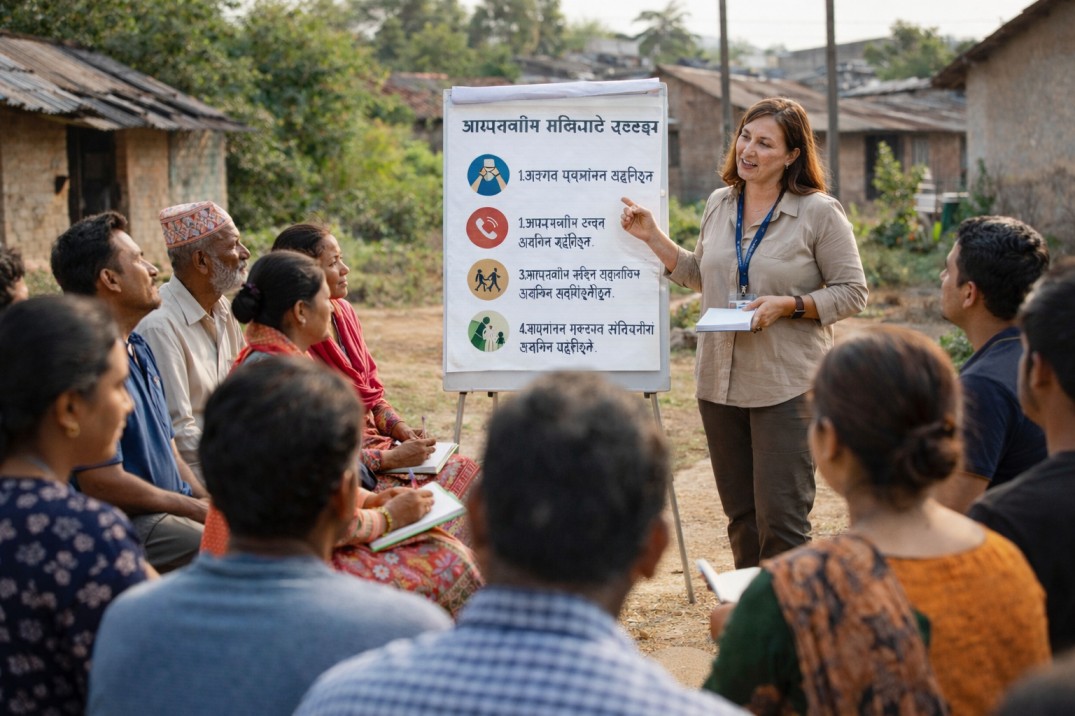
Risk Reduction has become a key factors for governments and organizations worldwide. community based disaster management focuses on risk reduction programs designed by and for people living in disaster prone areas. Community based approaches recognize the unique vulnerabilities, capacities, and needs of local communities, making disaster management more relevant and effective. Capacity building as the process of developing and strengthening the skills, instincts, abilities, processes, and resources that organizations needed to achieve the organizational objectives. National risk reduction consortium flagship two highlighted national capacity building of the country is essential for enhancing the ability to respond and to scale up preparedness levels including effective partnerships to strengthen coordinated efforts among stakeholders.
The Constitution of Nepal, 2015 has set the policy of early warning, disaster preparedness, rescue, relief, and rehabilitation for preventing disasters. Nepali security forces are actively engaged during the time of disasters and their necessity has been raised day by day. Hence, it has been a prerequisite to train the personnel. All three security forces have prioritized training and have established their training schools. The objective of training school has given ample emphasis to producing competent, confident, and committed technically trained manpower in disaster-related rescue operations and other humanitarian relief activities.
But security forces are key responders to respond multiple disasters in the country, to make community and nation resilient and capable to cope the disasters, people should be well aware and can act as a first responder in case of disaster and emergency. For this, Disaster Risk Reduction and Management Act ,2017 has tasked the security forces to conduct training and awareness program on disaster risk reduction in the school and community. Capacity building, as an important part of preparedness to the community, is essential to lessen the risk of disasters, which can be performed by concerned stakeholders and expert groups.