Disaster Management in Nepal: How Technology Can Save Lives Before Help Arrives
January 17, 2026Nikson Shrestha
When disaster strikes in Nepal, help doesn’t always arrive immediately. Earthquakes, landslides, floods, and avalanches can cut off roads, communication, and access to emergency services. In those critical first minutes and hours, survival often depends not on rescue teams—but on preparedness, awareness, and increasingly, technology.
Nepal sits in a high-risk disaster zone. The 2015 earthquake showed how quickly lives can change and how important early information is. Today, technology is becoming a powerful lifesaver, helping people act faster and smarter before official help arrives.
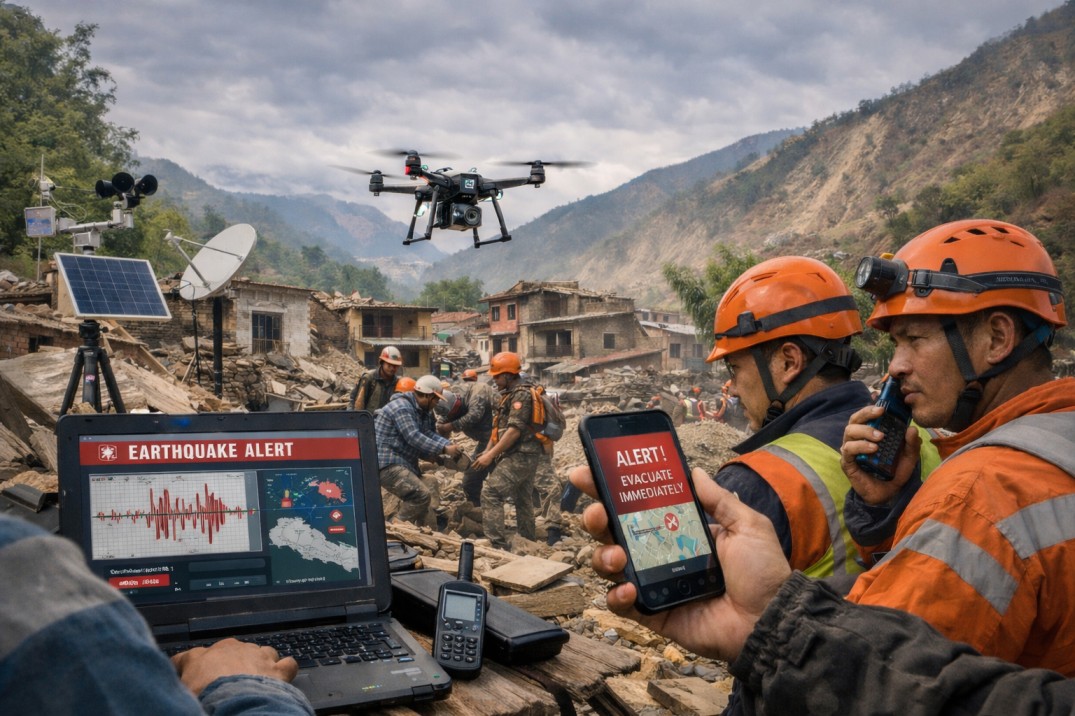
One of the most important tools is the mobile phone. Early warning systems can send SMS alerts about floods, landslides, or extreme weather, giving people precious time to move to safer areas. Even simple apps can share safety tips, emergency contacts, and location information. Social media platforms like Facebook and WhatsApp also help families confirm safety and coordinate help when communication lines are limited.
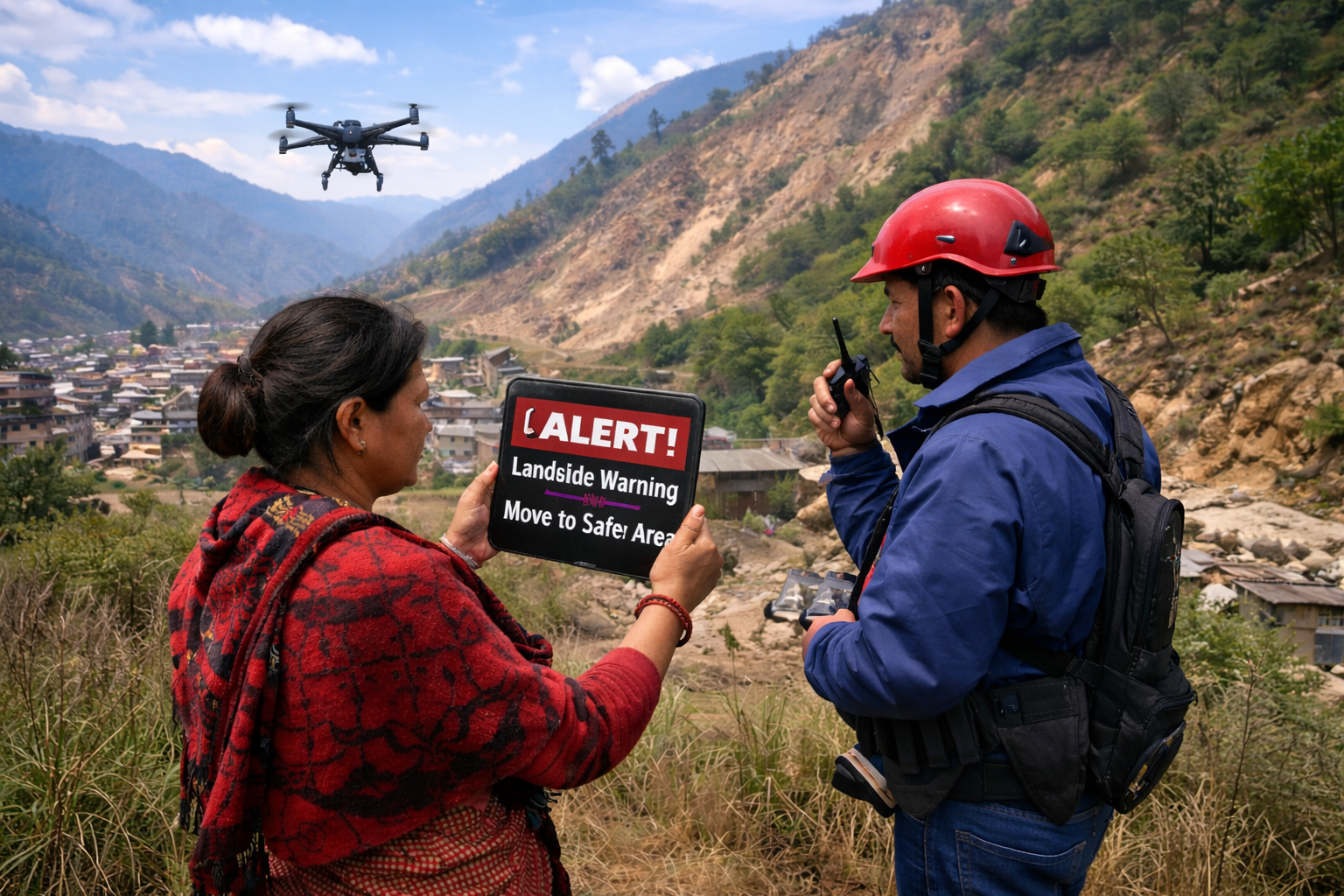
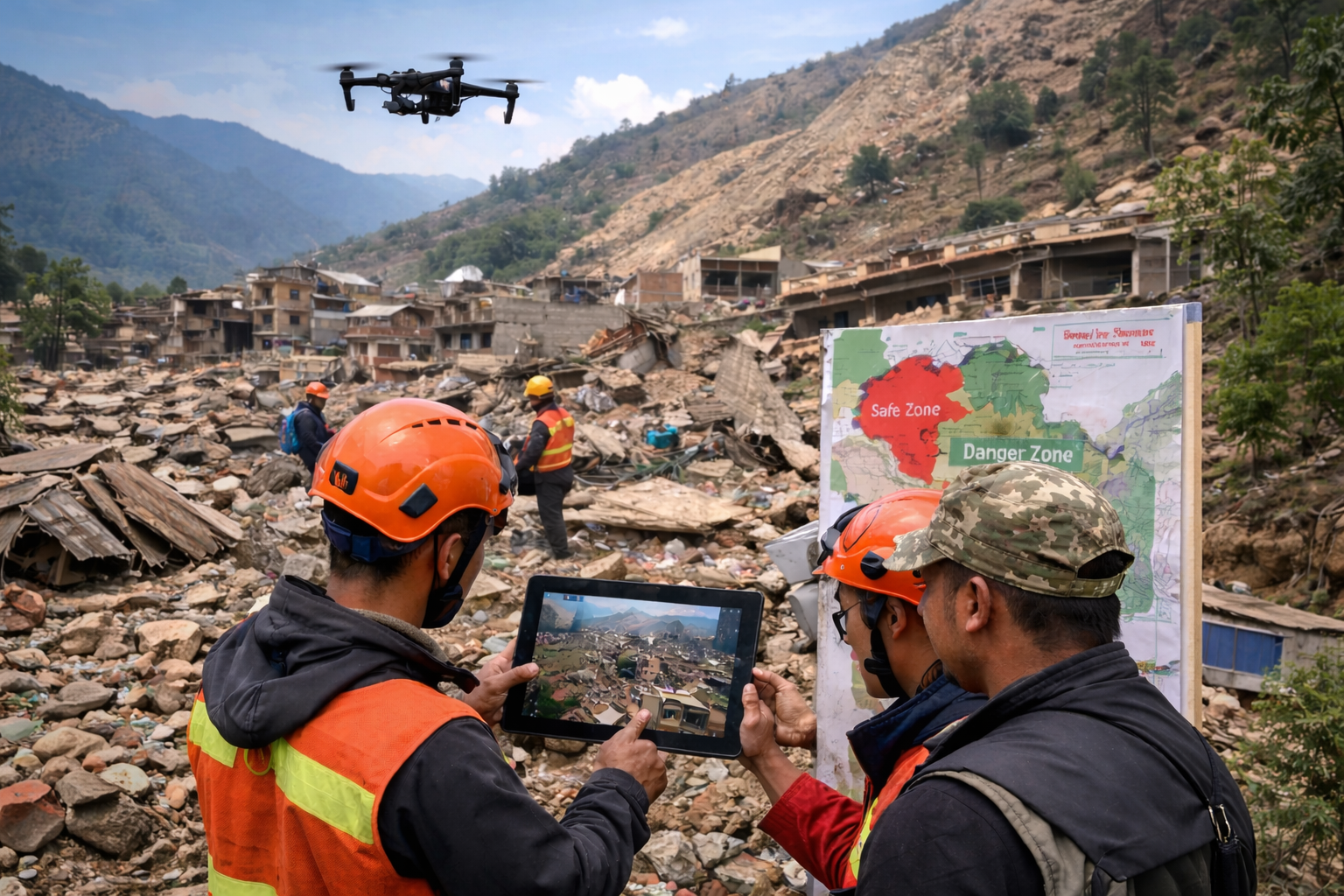
Another life-saving innovation is GPS and digital mapping. Tools like Google Maps and community-based mapping platforms help identify safe routes, shelters, and danger zones. During disasters, these maps help both citizens and rescuers understand which areas are most affected.
Drones and remote sensing technology are also transforming disaster response. They can quickly survey damaged areas, find trapped victims, and deliver critical supplies to places that vehicles cannot reach. This saves time and reduces risk for rescue teams.
Technology also empowers local communities. With proper training, people can use mobile alerts, radio systems, and emergency apps to make quick decisions. This turns ordinary citizens into first responders, improving survival chances.
However, technology alone is not enough. Awareness, training, and preparedness must go hand-in-hand with innovation. Schools, communities, and government agencies must work together to ensure people know how to use these tools effectively.
In Nepal, where geography and infrastructure can delay emergency response, technology is more than convenience—it is a lifeline. By embracing smart tools and digital solutions, Nepal can save lives, reduce damage, and build a safer future where help begins not hours later, but instantly, in the hands of its people.